
PMFME Scheme: Micro Food Processing Subsidy and Loans
How qualifying food-processing units can assess PMFME capital subsidies, loan responsibilities and ODOP-related support.
Eligibility: Eligible micro food-processing enterprises and qualifying groups that satisfy project, bank-credit, documentation and scheme rules.
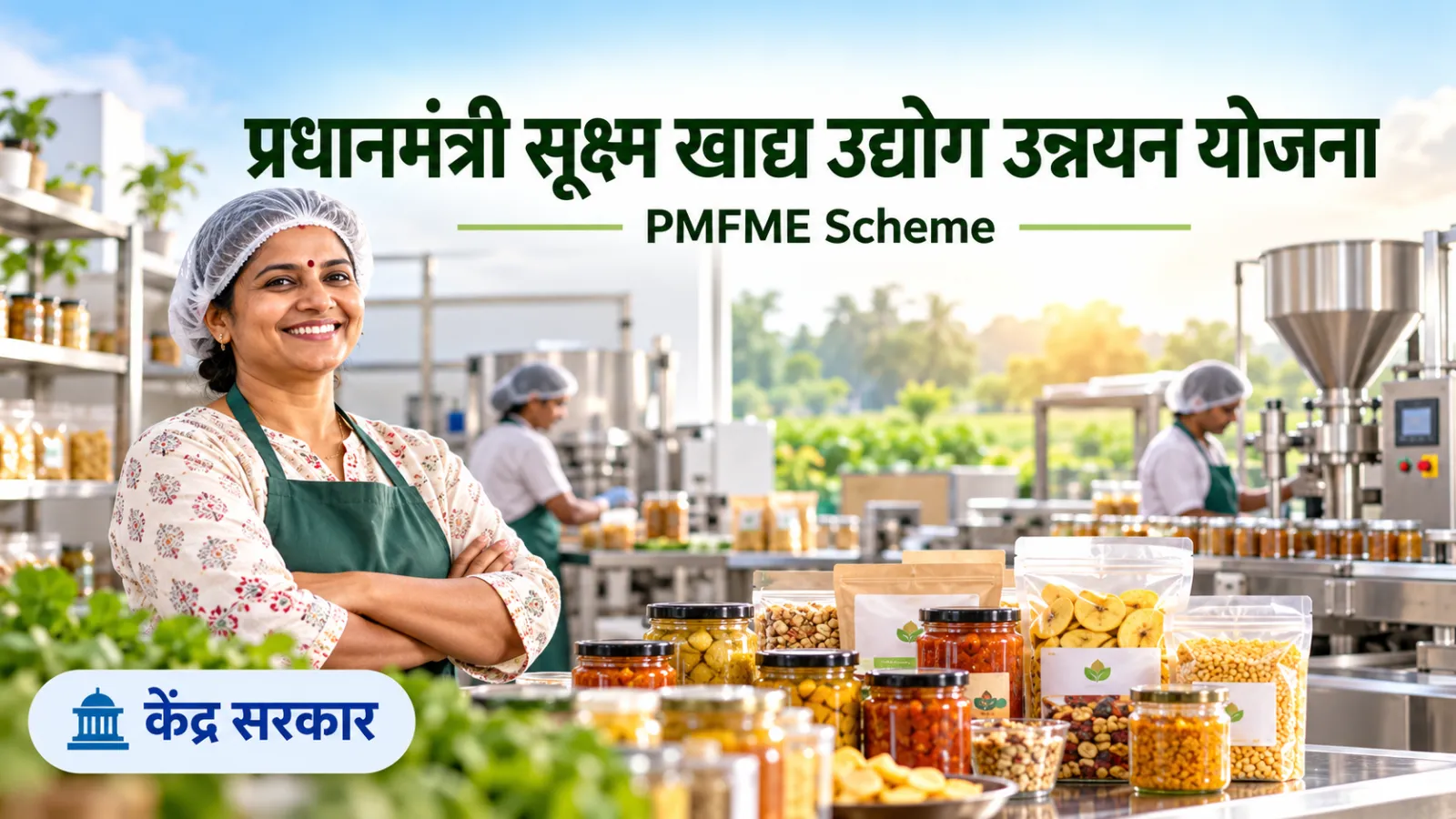
PMFME Scheme: Micro Food Processing Subsidy and Loans: Practical 2026 Guide
How qualifying food-processing units can assess PMFME capital subsidies, loan responsibilities and ODOP-related support. This guide distinguishes published programme design from an individual entitlement, approval or disbursement. It is written for readers who need to identify the actual authority handling their next step.
Key facts before proceeding
- PMFME is a Ministry of Food Processing Industries initiative aimed at formalising and strengthening micro food-processing enterprises.
- An eligible individual unit can receive a 35% credit-linked capital subsidy on qualifying project cost, capped at ₹10 lakh per unit.
- The Ministry states that beneficiary contribution should be at least 10%, with the balance financed by a bank loan.
- Collectives, SHGs, producer groups and shared infrastructure may follow different support rules from an individual unit.
Why micro food processing needs dedicated support
A small food operation can sell well locally yet struggle with hygiene systems, standard packaging and reliable equipment. PMFME targets these business gaps through a mixture of financing, capacity building and ecosystem support.
Always separate a programme announcement from the operative conditions under which benefits are delivered. An official page can explain the design without confirming that a particular application window is currently open. Check the department and local implementing institution before paying a fee or submitting sensitive documents.
The calculation behind the capital subsidy
The 35% rate applies to eligible project cost rather than every rupee an entrepreneur spends. The ₹10 lakh amount is the ceiling on the individual-unit capital subsidy, not a universal loan cap or an automatic payment.
For practical planning, create a short record of the problem, the organisation contacted and the evidence already supplied. This makes follow-up more efficient. Do not create a duplicate application simply because a portal has not immediately updated its status; ask the authorised office what the current record actually shows.
Why own contribution matters
Applicants must consider their own capital because the project is not entirely grant-financed. The ministry specifies at least 10% beneficiary contribution, with bank funding for the remaining eligible cost.
Headline benefit amounts should not be used as personal financial guarantees. Some programmes deliver services, some involve lending, and others transfer approved assistance. The beneficiary should understand the correct mechanism before committing household savings, signing a loan agreement or promising a payment to a third party.
What the lender examines
A subsidy framework does not override normal lending judgment. Banks can examine cost estimates, cash flow, business history and credit information before deciding whether to finance a proposed processing unit.
Take special care with identity information. A convincing social-media graphic and a government-style logo do not authenticate a payment or an application link. Use recognised public-service channels, keep credentials private and request a receipt when the relevant office formally accepts a document or correction.
How One District One Product is relevant
The ODOP approach helps organise support around a district recognised food product and supply chain. It may influence training or project planning; applicants should check the current guidelines before assuming all products are treated identically.
Where implementation varies by district or institution, ask a precise question rather than assuming a nationwide procedure. The most useful answer identifies the responsible authority, the current stage and the next document or decision required. Keep a dated copy of that answer so later enquiries are grounded in evidence.
Modernising an existing processing unit
Existing units may seek capital upgrades that reduce waste, improve consistency or support better packaging. A sensible proposal explains what the investment will change and how the enterprise will maintain it after installation.
The useful next step is to identify exactly which part of the process applies to the household or applicant. Keep the relevant reference, date and written response together. A neighbour’s experience may be helpful context, but it is not evidence that the same eligibility decision or timetable applies in another case.
Evaluating a proposed new business
The official portal refers to eligible establishment as well as upgradation routes in relevant contexts. A new entrepreneur should first test product demand and obtain a workable production and financial plan.
Always separate a programme announcement from the operative conditions under which benefits are delivered. An official page can explain the design without confirming that a particular application window is currently open. Check the department and local implementing institution before paying a fee or submitting sensitive documents.
Different rules for self-help groups
Self-help groups can receive support through routes designed for collective processing, working capital and capacity building. Seed capital and credit-linked grants are different instruments and should not be merged into one universal cash entitlement.
For practical planning, create a short record of the problem, the organisation contacted and the evidence already supplied. This makes follow-up more efficient. Do not create a duplicate application simply because a portal has not immediately updated its status; ask the authorised office what the current record actually shows.
Food safety as part of financial viability
Food-processing investment has to translate into safe, consistent products. Packaging, hygiene, shelf life, labelling and required registrations may be as significant as the machine itself for customer trust and repeat sales.
Headline benefit amounts should not be used as personal financial guarantees. Some programmes deliver services, some involve lending, and others transfer approved assistance. The beneficiary should understand the correct mechanism before committing household savings, signing a loan agreement or promising a payment to a third party.
Preparing a useful project report
A credible project report separates fixed equipment cost from working capital and ongoing expenses. Lenders need to understand the realistic operating cycle, not an optimistic estimate copied from another food business.
Take special care with identity information. A convincing social-media graphic and a government-style logo do not authenticate a payment or an application link. Use recognised public-service channels, keep credentials private and request a receipt when the relevant office formally accepts a document or correction.
Using the PMFME official route
Applicants should use the Ministry portal and authorised state implementation channels to confirm current forms and procedural stages. Old guides may describe application windows that are no longer open.
Where implementation varies by district or institution, ask a precise question rather than assuming a nationwide procedure. The most useful answer identifies the responsible authority, the current stage and the next document or decision required. Keep a dated copy of that answer so later enquiries are grounded in evidence.
Why subsidy is not the same as free cash
A credit-linked capital subsidy should not be confused with an unrestricted cash award. The lender and implementing agency apply specific disbursement and adjustment procedures that must be read alongside the sanction terms.
The useful next step is to identify exactly which part of the process applies to the household or applicant. Keep the relevant reference, date and written response together. A neighbour’s experience may be helpful context, but it is not evidence that the same eligibility decision or timetable applies in another case.
Managing the enterprise after approval
After equipment arrives, operators still need sales discipline, waste control, maintenance and bookkeeping. Regular review of product margins and payment schedules can prevent the subsidy headline from overshadowing business reality.
Always separate a programme announcement from the operative conditions under which benefits are delivered. An official page can explain the design without confirming that a particular application window is currently open. Check the department and local implementing institution before paying a fee or submitting sensitive documents.
A practical decision before applying
The programme can help an eligible processor expand, but only when the project and repayment plan are credible. Verify the applicable subsidy route and obtain written lender terms before committing to major purchases.
For practical planning, create a short record of the problem, the organisation contacted and the evidence already supplied. This makes follow-up more efficient. Do not create a duplicate application simply because a portal has not immediately updated its status; ask the authorised office what the current record actually shows.
Frequently asked questions
Does meeting a headline description guarantee approval?
No. The competent authority still checks the applicable scheme conditions, supporting records and implementation requirements.
Is there always an open online application form?
No. Some processes involve official service centres, district offices, bank appraisal or pre-existing beneficiary lists. Check the current route.
What if my identity or household records do not match?
Use the responsible agency’s correction procedure and retain an acknowledgement. Do not hand OTPs or account passwords to an unofficial intermediary.
How should a pending payment be investigated?
Identify whether the outstanding step is verification, sanction, transfer processing or actual bank credit. Different agencies handle these stages.
Can a social-media deadline be trusted?
Not without confirmation. Check the government notice and its date; an old application window may have already closed.
Where should an applicant verify the rules?
Use the official government resources below and contact the authorised implementing office for any case-specific decision.
Government references and editorial disclaimer
- https://pmfme.mofpi.gov.in/pmfme/
- https://mofpi.gov.in/pmfme/shgs-fpos-co-operatives-individual-micro-food-enterprise
- https://www.mofpi.gov.in/en/pmfme/support-fpos-shgs-producer-cooperatives
Independent informational portal, not a government agency. Verify the latest scheme rules before applying.
Always check the official website for final and accurate information.
Visit official website: pmfme.mofpi.gov.in ↗Last updated: 20 Oct 2026