
DDU-GKY Rural Skills Programme: Training, Eligibility and Placement
Centrally supported rural-skilling programme that offers approved job-oriented courses and placement support for qualifying rural youth.
Eligibility: Eligible young people from poor rural households, commonly aged 15–35, with age relaxation up to 45 for specified vulnerable groups.
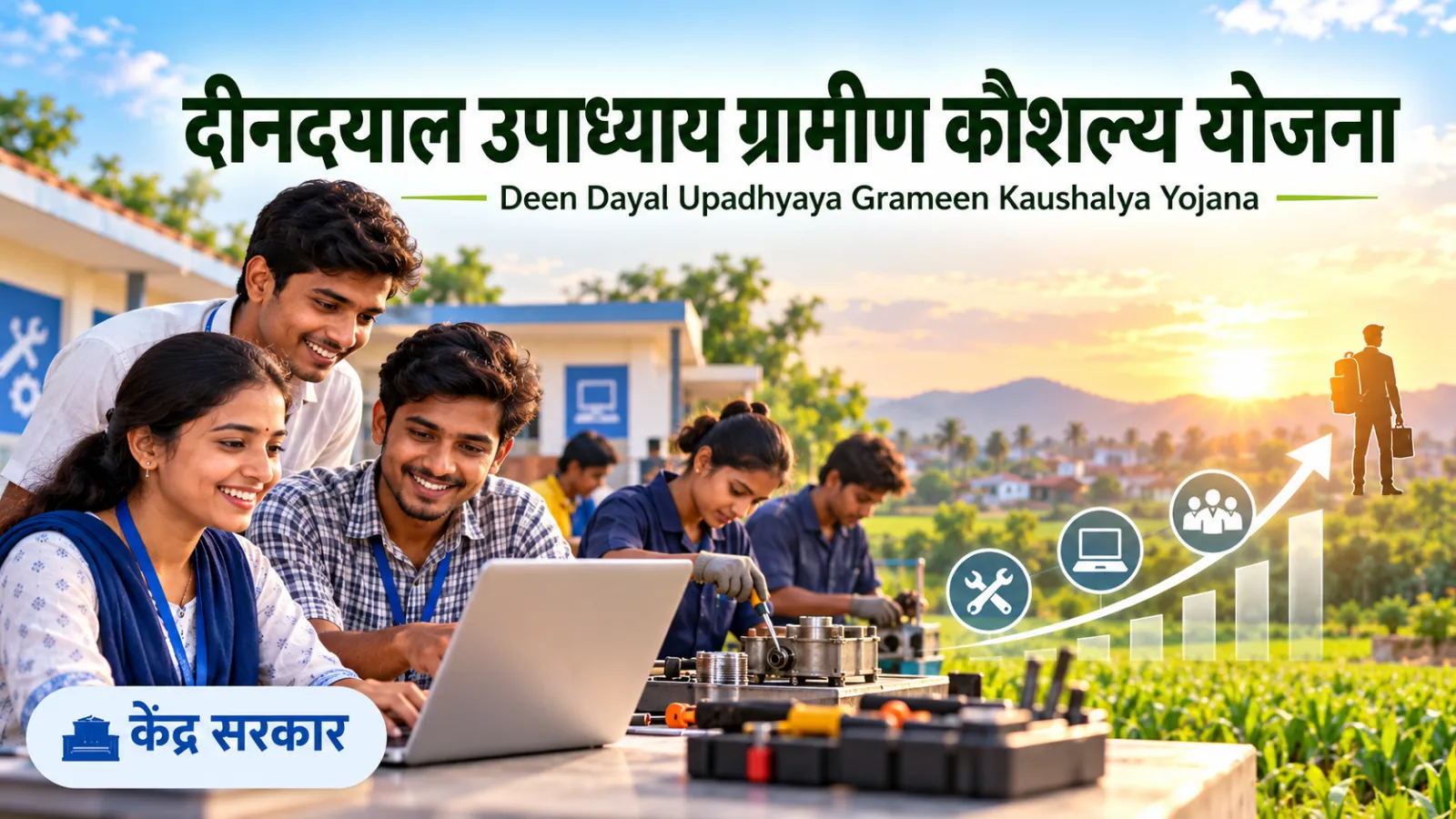
Why DDU-GKY exists
Deen Dayal Upadhyaya Grameen Kaushalya Yojana is intended to connect young people from disadvantaged rural households with employable skills. It is a training and placement-support programme, not an announcement of guaranteed civil-service vacancies.
This distinction matters for DDU-GKY Rural Skills Programme because the current official instructions and the applicant’s verified records determine the outcome. A benefit described in a public scheme summary is not an individual sanction or a promise that all applications will be approved.
How the programme operates locally
Implementation involves sanctioned projects and approved training partners working with government rural-livelihood systems. An eligible person still needs access to a relevant local or residential training batch.
For a useful follow-up, write down the exact portal message, the date it appeared and the office responsible for the step. Ask for a genuine reference or acknowledgement where available. Avoid circulating complete identity and financial details in public groups while troubleshooting.
Who is in the usual age group
An official state programme FAQ identifies poor rural youth aged 15–35 as a central target group. It also recognises relaxation up to 45 years for women and specified vulnerable categories, including persons with disabilities.
When public guidance changes, pay attention to the effective date, the affected category and the official order. Enrolment, verification and payment are distinct administrative events; confusing them can lead applicants to contact the wrong institution or expect an unrealistic deadline.
No-fee training and why it matters
The official FAQ says training, registration, examinations, certification and placement under approved projects are not charged to candidates. This is important when an agent offers to reserve a place in exchange for a personal payment.
This distinction matters for DDU-GKY Rural Skills Programme because the current official instructions and the applicant’s verified records determine the outcome. A benefit described in a public scheme summary is not an individual sanction or a promise that all applications will be approved.
Courses are selected by available projects
Available trades can differ by training provider and district. Retail, service, technical or hospitality jobs may require different skills, literacy levels and work arrangements; there is no universal list of live seats for every village.
For a useful follow-up, write down the exact portal message, the date it appeared and the office responsible for the step. Ask for a genuine reference or acknowledgement where available. Avoid circulating complete identity and financial details in public groups while troubleshooting.
Training length varies
Approved courses may run for different periods, including three, six, nine or twelve months. The advertised duration should reflect the actual project, classroom curriculum and any on-the-job component.
When public guidance changes, pay attention to the effective date, the affected category and the official order. Enrolment, verification and payment are distinct administrative events; confusing them can lead applicants to contact the wrong institution or expect an unrealistic deadline.
The application and counselling stage
Candidates should ask the authorised state rural-livelihood body or project partner about active batches. Counselling and document checks help identify whether the course matches the learner’s aspirations and existing abilities.
This distinction matters for DDU-GKY Rural Skills Programme because the current official instructions and the applicant’s verified records determine the outcome. A benefit described in a public scheme summary is not an individual sanction or a promise that all applications will be approved.
Documents an applicant may need
Age evidence, identity, rural-household and eligibility records, schooling certificates and contact information can be relevant. The actual sanctioned course may require a more specific checklist than a generic online article provides.
For a useful follow-up, write down the exact portal message, the date it appeared and the office responsible for the step. Ask for a genuine reference or acknowledgement where available. Avoid circulating complete identity and financial details in public groups while troubleshooting.
What happens during the course
Practical instruction, attendance and workplace preparation are essential. Enrolment alone is not a certificate or an employment contract, and learners should ask about minimum assessment standards before joining.
When public guidance changes, pay attention to the effective date, the affected category and the official order. Enrolment, verification and payment are distinct administrative events; confusing them can lead applicants to contact the wrong institution or expect an unrealistic deadline.
Certification after assessment
A recognised certificate normally depends on successful completion and assessment. Verify the awarding body and course recognition rather than assuming a private training-centre brochure is sufficient.
This distinction matters for DDU-GKY Rural Skills Programme because the current official instructions and the applicant’s verified records determine the outcome. A benefit described in a public scheme summary is not an individual sanction or a promise that all applications will be approved.
Employment support versus a guaranteed job
Placement facilitation can connect graduates with employers, but it does not make every position a permanent government role. Candidates should compare role descriptions, take-home salary, contract type and career progression.
For a useful follow-up, write down the exact portal message, the date it appeared and the office responsible for the step. Ask for a genuine reference or acknowledgement where available. Avoid circulating complete identity and financial details in public groups while troubleshooting.
Relocation and real job costs
Work may be offered outside a trainee’s district or state. Before accepting, compare rent, food, travel and shift conditions with the quoted salary. A stronger gross offer may not produce better savings after relocating.
When public guidance changes, pay attention to the effective date, the affected category and the official order. Enrolment, verification and payment are distinct administrative events; confusing them can lead applicants to contact the wrong institution or expect an unrealistic deadline.
Support for women and vulnerable candidates
Access, safety and reasonable accommodation matter when choosing a centre. Ask about authorised hostel arrangements, safe transport, complaints and relevant age relaxations before giving personal documents to a recruiter.
This distinction matters for DDU-GKY Rural Skills Programme because the current official instructions and the applicant’s verified records determine the outcome. A benefit described in a public scheme summary is not an individual sanction or a promise that all applications will be approved.
Checking whether an operator is authorised
Confirm that a training provider and particular batch are sanctioned within the official programme. A logo on a social-media advertisement does not prove eligibility to run publicly funded training.
For a useful follow-up, write down the exact portal message, the date it appeared and the office responsible for the step. Ask for a genuine reference or acknowledgement where available. Avoid circulating complete identity and financial details in public groups while troubleshooting.
Questions candidates should ask
Is this a government vacancy advertisement? No. Does an approved trainee pay registration fees? The government FAQ describes no such charges. Is every trade available everywhere? Project availability varies by location and time.
When public guidance changes, pay attention to the effective date, the affected category and the official order. Enrolment, verification and payment are distinct administrative events; confusing them can lead applicants to contact the wrong institution or expect an unrealistic deadline.
Always check the official website for final and accurate information.
Visit official website: ddugky.nagaland.gov.in ↗Last updated: 20 Oct 2026