PM SVANidhi RuPay Credit Card 2026: Eligibility and Steps
A practical guide to the restructured PM SVANidhi loans, UPI-linked RuPay credit card eligibility and digital cashback.
PM SVANidhi RuPay Credit Card 2026: Who Can Get It?
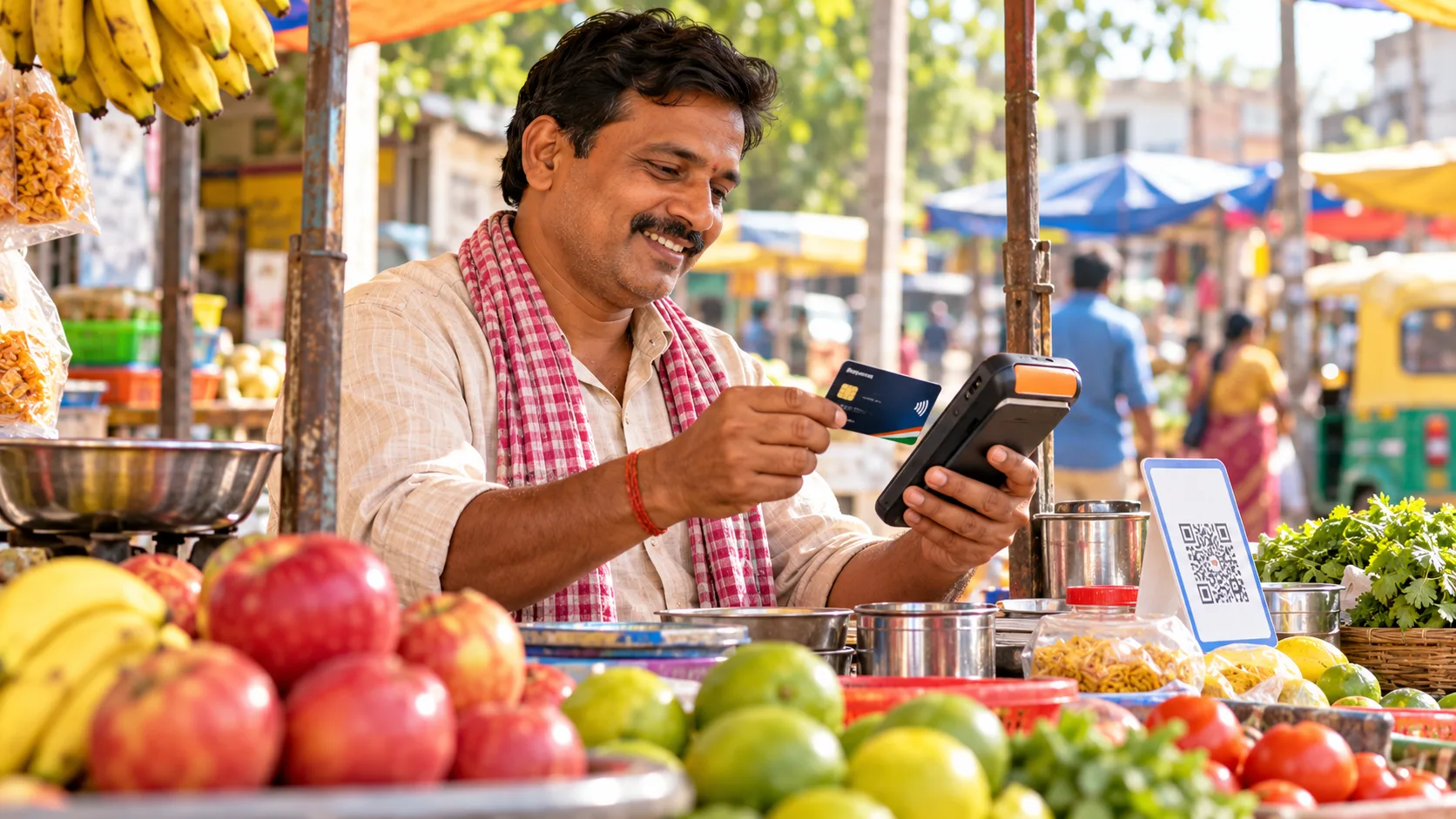
If you run a roadside food stall, sell vegetables from a cart or operate a small street-vending business, you may have heard about the new RuPay credit card introduced under PM SVANidhi. The card is designed to provide eligible street vendors with access to additional credit when they need to manage business expenses or other permitted financial requirements.
However, the most important point is often missed: the card is not automatically available to everyone who registers under PM SVANidhi. The Government has linked eligibility to the successful repayment of the second working-capital loan tranche, followed by the applicable card-issuing process.
The Government restructured PM SVANidhi in August 2025, increasing the size of its initial loan tranches and introducing UPI-linked RuPay credit cards. The lending period was also extended until 31 March 2030.
The card can offer a credit limit of up to ₹30,000, but that amount is borrowed credit, not free government assistance.
This guide explains who may qualify, how the card differs from a SVANidhi loan, what to check after repaying the second loan and how the digital cashback incentives work.
What Changed Under PM SVANidhi in 2026?
PM SVANidhi began in June 2020 to help eligible urban street vendors obtain collateral-free working-capital loans through formal financial institutions.
Following the Government's 2025 restructuring, the scheme offers three progressive loan tranches and an additional UPI-linked RuPay credit card facility for qualifying vendors.
The larger loan amounts are intended to help vendors move towards higher levels of working capital as they establish a repayment record.
| Facility | Maximum amount | Key requirement |
|---|---|---|
| First working-capital loan | ₹15,000 | Vendor eligibility and lender approval |
| Second working-capital loan | ₹25,000 | Successful repayment of the first loan |
| Third working-capital loan | ₹50,000 | Successful repayment of the second loan |
| UPI-linked RuPay credit card | Up to ₹30,000 credit limit | Successful second-loan repayment and applicable card approval |
These amounts are maximum limits, not guaranteed sanctions.
The Government's July 2026 explanation also identifies standard loan repayment periods of 12, 18 and 36 months for the first, second and third tranches, respectively. A credit card has its own billing and repayment conditions.
Who Is Eligible for the ₹30,000 RuPay Credit Card?
The Government's official PM SVANidhi updates identify successful repayment of the second loan tranche as the main eligibility milestone for the UPI-linked RuPay credit card.
This means simply taking the first loan, having a UPI ID or using a QR code for customer payments does not automatically qualify a vendor for the card.
Consider a vegetable seller who borrowed under the first tranche, repaid it successfully and later obtained the second tranche. Once the second loan has also been repaid successfully, that vendor may be considered for the card under the applicable banking arrangements.
However, completing the repayment milestone does not automatically establish that a card with the maximum limit has been approved.
The issuing lender may still review identity verification, account status, repayment information and the relevant credit-card requirements.
Second PM SVANidhi Loan Repaid but No Card Yet?
Some borrowers may expect the RuPay card to be issued immediately after paying the final instalment of their second loan.
In practice, the loan repayment record and the bank's card issuance process can involve separate steps.
For example, a loan may have been fully repaid, but its closure status may not yet appear in the relevant banking system.
Another borrower may need to update contact information or complete additional bank verification.
A participating lender may also have a specific procedure for receiving and processing eligible card requests.
Three Questions to Ask Your Bank
- Has my second PM SVANidhi loan been recorded as successfully repaid and closed?
- Is there any verification or account issue that needs to be resolved?
- What is the current authorised process for applying for the UPI-linked RuPay credit card?
Ask for an official service-request number or written confirmation where available. Do not rely on an agent's promise that the card will be delivered within a fixed number of days.
Is the RuPay Credit Card the Same as the ₹50,000 Third Loan?
No. These are different financial products.
The third PM SVANidhi loan is a working-capital term loan, with repayment obligations under the applicable lending arrangement.
The RuPay credit card provides a credit facility that can be used within a sanctioned limit, subject to the issuer's transaction and billing rules.
A vendor who has successfully completed the second loan may ask about both facilities. However, approval of one does not automatically guarantee approval of the other.
It would also be misleading to combine the advertised ₹50,000 third-loan limit and ₹30,000 card limit and describe ₹80,000 as a guaranteed government payment.
Before taking additional credit, vendors should consider how the business will manage repayments during months with lower sales.
How Does a UPI-Linked RuPay Credit Card Work?
The UPI-linked RuPay credit card is designed to support eligible payments through the UPI ecosystem, subject to the issuing bank's and payment network's rules.
It should not be assumed that every UPI transfer or QR-code transaction can be made using a credit card.
Permitted transaction types, billing cycles, interest-free periods where applicable, fees and repayment obligations depend on the particular card arrangement.
Before accepting an offer, ask the bank which transactions are supported and what happens if the full statement balance is not paid by the due date.
A credit limit of ₹30,000 represents the maximum approved borrowing capacity under that card. It is not equivalent to cash already earned or deposited in the vendor's bank account.
How to Apply or Check Your Card Eligibility
Official government publications explain the card's eligibility and purpose. They do not establish that every bank must use exactly the same public online application form.
The practical starting point is therefore the financial institution that handled the borrower's PM SVANidhi loan.
- Identify your lending bank: Check the existing SVANidhi loan documents.
- Confirm your loan stage: Verify that the second tranche has been repaid successfully.
- Obtain repayment records: Request a statement or closure confirmation where available.
- Check personal details: Ensure the registered mobile number and required KYC information are accurate.
- Ask about the card process: Contact the bank through an authorised branch or service channel.
- Review the terms: Understand the proposed credit limit, billing cycle, charges and repayment conditions.
- Submit required documents: Use the bank's official submission process.
- Keep a reference: Save the application or service-request acknowledgement.
If the problem concerns vendor identification or the original scheme registration, the relevant Urban Local Body may also be able to provide guidance.
Will Every Approved Vendor Get the Full ₹30,000 Limit?
No. Government information describes a credit limit of up to ₹30,000.
The phrase "up to" is important because it identifies the maximum possible limit, not a compulsory minimum that every bank must issue.
An individual card's sanctioned limit can depend on the applicable issuing-bank requirements and approval process.
If a lower amount is offered, the vendor can ask the bank whether the limit may be reviewed later and what conditions apply.
A neighbour's card limit or a promotional screenshot does not establish another person's entitlement.
How Much Digital Cashback Is Available Under PM SVANidhi?
PM SVANidhi also encourages street vendors to adopt digital payments through conditional cashback incentives.
These incentives are separate from the loan tranches and the RuPay credit card facility.
| Eligible transaction category | Maximum incentive |
|---|---|
| Regular eligible digital sales | Up to ₹100 per month, or ₹1,200 over 12 months |
| Qualifying digital wholesale purchases | Up to ₹100 per quarter, or ₹400 over four quarters |
| Combined potential incentive | Up to ₹1,600, subject to the applicable conditions |
Government publications describe a minimum purchase amount of ₹2,000 for relevant wholesale digital transactions, alongside further cashback rules.
These figures are maximum opportunities under the specified arrangements, not automatic deposits for every vendor.
Completing a UPI transaction does not necessarily mean that it qualifies for a cashback reward.
What if Digital Cashback Has Not Arrived?
If a vendor regularly accepts digital payments but has not seen a cashback credit, the first step is to review genuine transaction records.
Confirm that customer payments reached the correct bank or merchant account.
A screenshot sent by a customer is not always sufficient evidence that the amount has been settled.
Then ask the relevant authorised banking or scheme-support channel whether the transactions meet the cashback conditions for the period concerned.
Do not manufacture sales transactions or transfer money between your own accounts simply to increase the number of digital transactions.
Using a RuPay Credit Card Responsibly in a Small Business
Street-vending businesses often face short-term cash-flow problems.
A fruit seller may need to purchase fresh stock before the day's sales are completed. A food-stall owner may have to buy ingredients in advance. Credit can sometimes help manage the timing of such expenses.
However, revenue can change because of weather, seasonal demand, local restrictions or weaker customer activity.
A card should therefore be used with a repayment plan rather than simply because unused credit is available.
Keeping a basic notebook of daily sales, stock purchases, loan instalments and card payment dates can make financial commitments easier to manage.
It is also important to distinguish business income from new borrowing. A credit-card transaction increases a repayment obligation; it is not additional sales revenue.
What Documents Should Vendors Keep Ready?
The issuing lender's current checklist should determine which documents are required.
However, borrowers can prepare a basic record folder containing:
- PM SVANidhi loan account or application reference.
- Available evidence of successful second-loan repayment.
- Loan closure confirmation, where issued.
- Identity and KYC details accepted by the bank.
- Current registered mobile number.
- Relevant street-vendor identification or scheme records, where applicable.
- Any additional information requested by the authorised lender.
This is a preparation list, not a claim that every document is compulsory for all applicants.
Avoid sending full identity documents, account statements or confidential banking details to people contacting you through unverified social-media messages.
Should You Contact the Bank or the Urban Local Body?
PM SVANidhi involves different institutions with different responsibilities.
Urban Local Bodies play an important role in identifying eligible vendors and supporting implementation of the programme.
Financial institutions handle loan accounts, repayment records and relevant credit decisions.
If your problem relates to vendor registration or local scheme identification, the responsible Urban Local Body may be the appropriate contact.
If it concerns repayment, account closure, card approval, fees or the actual credit limit, start with the lending bank.
For unresolved bank-related matters, use the bank's formal customer-service or grievance procedure and keep the reference number.
Common RuPay Card Scams to Avoid
Some messages may claim that every SVANidhi borrower can immediately receive ₹30,000 or that the card will be activated after paying a fee to an unofficial account.
These promises should be treated cautiously.
- Never share OTPs, UPI PINs, CVVs or banking passwords.
- Do not install remote-screen applications at the request of an unsolicited caller.
- Check the card issuer and loan records through the bank's official channels.
- Do not mistake a credit limit for a government grant.
- Question demands for upfront payment to a private QR code.
- Report suspected financial fraud to the bank and official cybercrime authorities promptly.
Frequently Asked Questions About the PM SVANidhi RuPay Card
1. Who can qualify for the PM SVANidhi RuPay credit card?
The facility is intended for eligible street vendors who have successfully repaid the second PM SVANidhi loan tranche, subject to the lender's card approval.
2. What is the maximum credit limit?
Government information describes a limit of up to ₹30,000.
3. Will ₹30,000 be deposited into my bank account?
No. The figure represents credit-card borrowing capacity, not a cash grant.
4. Does taking the first loan qualify me for the card?
No. Successful repayment of the second tranche is the key eligibility milestone described in government publications.
5. Is the third SVANidhi loan different from the RuPay card?
Yes. The third working-capital loan and the credit card are separate products with distinct approval and repayment conditions.
6. Does every UPI payment earn cashback?
No. Cashback applies only to eligible transactions that meet the programme's requirements.
7. What are the revised loan amounts?
The first, second and third loan tranches are available up to ₹15,000, ₹25,000 and ₹50,000 respectively.
8. What if I repaid my second loan but have not received a card?
Contact your lending bank to confirm loan closure, repayment records, KYC status and the current card application process.
9. Are all card transactions interest-free?
No universal interest-free guarantee applies. Interest, billing and permitted UPI usage depend on the specific issuing bank's terms.
10. Until when has PM SVANidhi lending been extended?
The restructured scheme's lending period runs until 31 March 2030.
Conclusion
The PM SVANidhi UPI-linked RuPay credit card is an additional credit facility for eligible street vendors, not a benefit automatically issued after the first loan.
The important milestone is successful repayment of the second loan tranche. Even after that, the issuing bank's approval and card conditions remain relevant.
If you have completed your second loan, start by confirming its closure with the bank and asking about the current RuPay card process. Treat the ₹30,000 figure as a maximum credit limit, and review all fees, interest and repayment obligations before using the card.
Official Government Sources
- PM SVANidhi — Official Scheme Portal
- Ministry of Housing and Urban Affairs — RuPay Card Eligibility, 9 February 2026
- Government Update — Loan Progress and Cashback, 10 August 2026
- PM SVANidhi Restructuring Progress, 27 August 2026
Last reviewed: 19 October 2026. Confirm current card eligibility, credit limits, fees and repayment conditions with the authorised issuing bank.
Disclaimer: eSarkariYojna is an independent informational website, not a government department or financial institution. This article provides general information and does not guarantee a loan or credit-card approval. Individual decisions depend on the relevant lender and applicable programme rules.
Last updated: 19 Oct 2026