Saksham Anganwadi and POSHAN 2.0
Integrated Anganwadi services including supplementary nutrition and preschool support for eligible registered children and women, with linked health services.
Eligibility: Check age group, registration, service availability and local delivery with the Anganwadi centre.
What Is Mission Saksham Anganwadi and Poshan 2.0?
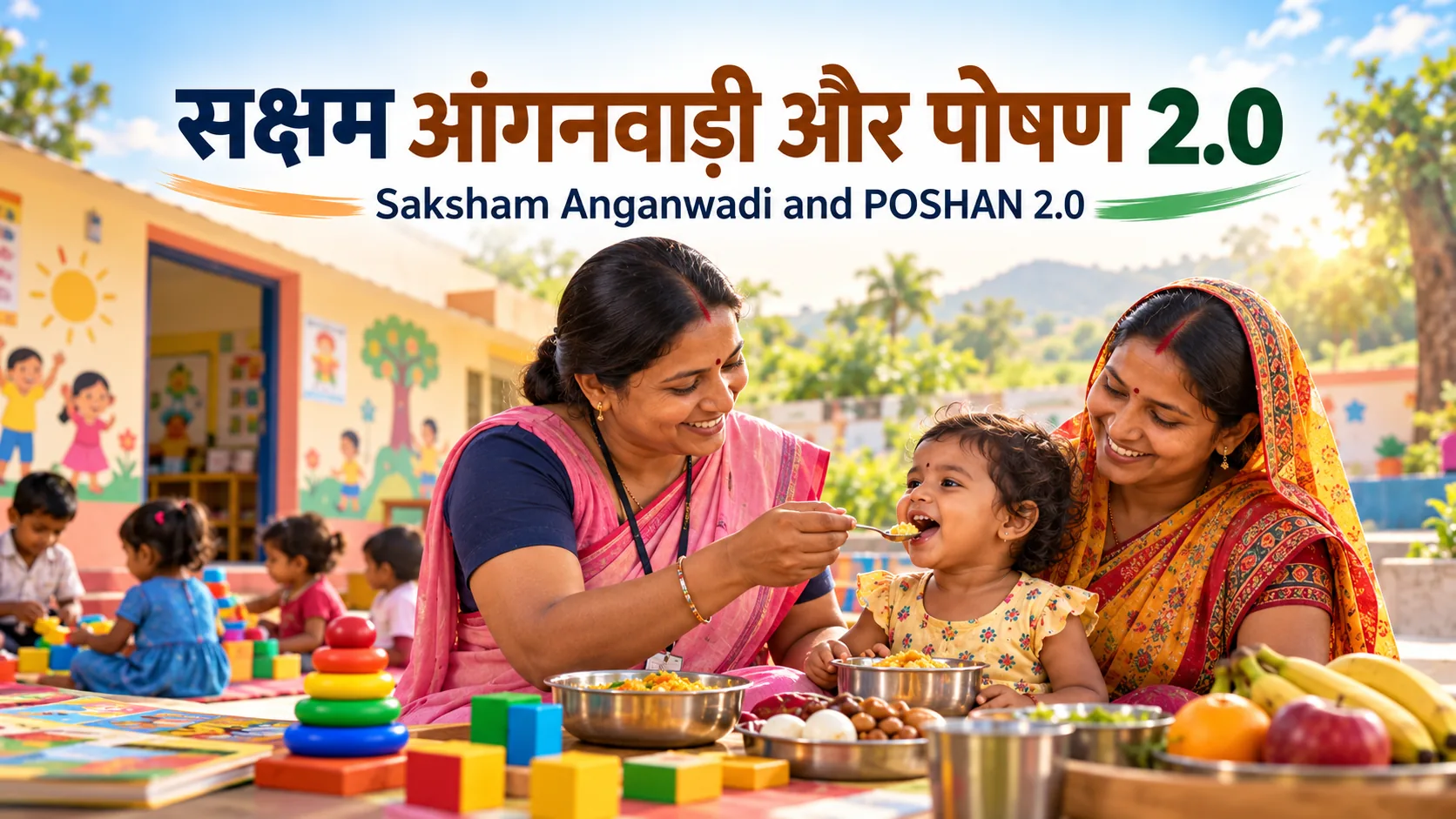
Mission Saksham Anganwadi and Poshan 2.0 is a Government of India programme that brings together supplementary nutrition, early childhood development and selected health-linked services through the Anganwadi system. Administered under the Ministry of Women and Child Development, it is designed to improve access to nutrition and care for young children, pregnant women, lactating mothers and eligible adolescent girls.
The programme is more than a food distribution arrangement. Anganwadi Centres also support early learning, nutritional awareness, growth monitoring and coordination with public health services. For families with young children, this makes the local Anganwadi an important point of contact for understanding the services available during the first years of life.
Mission Poshan 2.0 reorganised existing Anganwadi Services, Poshan Abhiyaan and the Scheme for Adolescent Girls under a broader framework. The programme aims to strengthen the quality of nutrition delivery while improving facilities and early childhood care at Anganwadi Centres.
It is important to understand that Saksham Anganwadi and Poshan 2.0 is not a universal cash-transfer programme. The principal benefits are services provided to eligible registered beneficiaries. A family should not expect an automatic bank payment merely because a child or pregnant woman is registered at an Anganwadi Centre.
Saksham Anganwadi and Poshan 2.0: Key Details
| Feature | Details |
|---|---|
| Programme | Mission Saksham Anganwadi and Poshan 2.0 |
| Responsible ministry | Ministry of Women and Child Development |
| Programme type | Centrally Sponsored Scheme |
| Main delivery channel | Anganwadi Centres |
| Children covered | Up to six years, depending on the service |
| Supplementary nutrition age group | Six months to six years |
| Women covered | Pregnant women and lactating mothers |
| Eligible adolescent girls | 14–18 years in designated geographical areas |
| Early childhood education | Primarily for children aged three to six years |
| Digital monitoring system | Poshan Tracker |
| Official information | Ministry of Women and Child Development |
Different programme components have different eligibility and service requirements. A preschool-age child, a pregnant woman and an adolescent girl will not necessarily receive the same benefits or use the same service arrangements.
Why Is Mission Poshan 2.0 Important?
The early years of a child's life are a critical period for physical growth, learning and development. Adequate nutrition, responsive care and appropriate health support are especially important during infancy and early childhood.
Families may face difficulties accessing nutritious food, recognising growth concerns or finding appropriate early learning opportunities. Mission Poshan 2.0 seeks to address these interconnected needs through locally available Anganwadi services.
The programme focuses on improving nutritional outcomes and reducing the burden of malnutrition. Government guidance identifies concerns such as stunting, wasting, underweight status and anaemia as important areas for nutrition-related intervention.
Its approach also emphasises community participation, nutrition education and coordination between government departments. Rather than relying on food distribution alone, the programme combines multiple services intended to support children and caregivers.
What Are the Six Main Anganwadi Services?
The Ministry of Women and Child Development identifies six key services delivered to eligible beneficiaries through the Anganwadi system. Some are provided directly at the Centre, while health-related services are linked to the National Health Mission and public health infrastructure.
1. Supplementary Nutrition
Supplementary nutrition is provided to eligible children, pregnant women, lactating mothers and adolescent girls covered under the applicable programme component. It is intended to help address the gap between normal dietary intake and nutritional requirements.
This support complements regular meals and should not be treated as a replacement for a balanced household diet or professional medical care.
2. Non-Formal Preschool Education
Children between three and six years of age can participate in early learning activities that support language, social development, play and basic understanding. These activities aim to prepare children for later schooling without treating preschool as a formal examination-based classroom.
3. Nutrition and Health Education
Anganwadi Workers help caregivers understand age-appropriate feeding, nutrition, hygiene and other child-care practices. This educational role is particularly valuable for first-time parents and families seeking reliable information about early childhood development.
4. Immunisation Support
Anganwadi Centres help connect eligible families with immunisation services. The actual healthcare provision is linked to authorised health workers and the public health system rather than being an independent medical service run solely by the Anganwadi.
5. Health Check-ups
Health-linked services and growth monitoring help identify children or women who may need additional assessment. Where a medical examination or treatment is necessary, the responsible healthcare facility has the appropriate clinical role.
6. Referral Services
When a concern requires further attention, the beneficiary can be connected with an appropriate health service. Referral arrangements are especially important when a child shows signs that require professional nutritional or medical assessment.
Who Is Eligible for Saksham Anganwadi and Poshan 2.0?
The programme covers several beneficiary groups, but eligibility depends on the particular service. The official scheme guidelines state that eligible Anganwadi Services are available on demand irrespective of caste, religion and income criteria, subject to the prescribed registration requirements.
The main beneficiary groups include young children, pregnant women, lactating mothers and adolescent girls in designated areas.
| Beneficiary group | Relevant support |
|---|---|
| Children from birth to three years | Early stimulation, care guidance and age-appropriate services, including supplementary nutrition from six months |
| Children aged three to six years | Supplementary nutrition, preschool education and other eligible services |
| Pregnant women | Supplementary nutrition, nutrition education and health-linked support |
| Lactating mothers | Supplementary nutrition and maternal-child care guidance |
| Adolescent girls aged 14–18 | Specified services in the Northeast Region and Aspirational Districts of other States |
Children younger than six months and older children have different nutritional needs. The supplementary nutrition component principally covers children from six months to six years, while early stimulation activities may begin much earlier.
Parents should ask the Anganwadi Worker which services are appropriate for the child's age and registered status instead of assuming that every age group receives the same food or activities.
Which Adolescent Girls Are Eligible?
The Scheme for Adolescent Girls under Mission Poshan 2.0 specifically covers eligible girls aged 14 to 18 years in all districts of the Northeast Region and in Aspirational Districts of other States.
Its objective is to support adolescent nutrition and help address longer-term nutritional challenges. Services may include supplementary nutrition, nutrition and health education, iron-folic acid-related interventions, health checks and appropriate referrals.
This geographical restriction is important. It would be inaccurate to state that every girl aged 14–18 in every Indian district automatically receives the same supplementary nutrition package.
Families should confirm whether their district is included in the relevant component through the local Anganwadi Centre or District Women and Child Development office.
What Kind of Food Is Provided at Anganwadi Centres?
The food provided under Mission Poshan 2.0 depends on the beneficiary category, nutritional requirements and locally approved distribution arrangements.
Official government communications describe three principal forms of supplementary nutrition: Take-Home Ration, morning snacks and Hot Cooked Meals.
Take-Home Ration (THR)
Take-Home Ration refers to supplementary nutritional food distributed for eligible beneficiaries to use at home. The specific products and distribution procedures can vary across States and beneficiary groups.
Caregivers should follow the instructions provided with the ration and seek clarification from the Anganwadi Worker about preparation and appropriate use. A generic description of THR should not replace local guidance on the supplied food product.
Hot Cooked Meals and Snacks
Eligible children may receive meals or snacks through their Anganwadi Centre according to the relevant programme and State arrangements.
The menu, number of distribution days and composition of the food may differ by location. Parents can ask their local Centre about the actual food schedule rather than relying on a general nationwide menu found online.
Additional Support for Children With Severe Malnutrition
The programme includes additional supplementary nutrition provisions for children identified with Severe Acute Malnutrition (SAM). Such children may also need clinical assessment and management through appropriate public health services.
Families should not treat additional Anganwadi food alone as a guaranteed cure for severe malnutrition or any medical condition.
How Are Nutritional Standards Determined?
Supplementary nutrition is provided according to the applicable nutrition norms under Schedule II of the National Food Security Act, 2013. These norms were revised in January 2023.
The revised approach places greater emphasis on dietary diversity and nutritional quality. In addition to energy intake, the Government identifies the importance of protein, healthy fats and essential micronutrients.
Micronutrients discussed in the official material include calcium, zinc, iron, dietary folate and certain vitamins. The objective is to improve the nutritional value of food rather than considering calorie quantity alone.
The precise food composition for a beneficiary is determined through the applicable programme standards and State delivery arrangement. Families should not independently substitute prescribed food products or quantities based on an online summary.
How to Register at an Anganwadi Centre
For most families, the local Anganwadi Centre is the natural starting point for accessing Mission Poshan 2.0 services. Registration is linked to the programme's delivery system rather than a general national cash-benefit application.
- Find your local Anganwadi Centre: Ask the Anganwadi Worker, local administration or relevant Women and Child Development office.
- Explain the beneficiary's circumstances: Provide information about the child's age or the woman's pregnancy or lactation status.
- Ask which services are available: Confirm the specific nutrition, education and health-linked components applicable to the person.
- Complete the prescribed registration: Supply the beneficiary information required under the current official procedure.
- Check the recorded details: Ask whether the beneficiary's registration is correctly reflected in the relevant system.
- Understand the service schedule: Confirm food distribution days, growth monitoring sessions and preschool activities.
- Follow up when necessary: Contact the Anganwadi Worker or supervisor if services are not being delivered as expected.
If the local Centre cannot explain the process or resolve a record problem, the Anganwadi Supervisor, Child Development Project Officer (CDPO) or District Programme Officer may be an appropriate next contact.
Is Aadhaar Required for Anganwadi Registration?
The official Mission Saksham Anganwadi and Poshan 2.0 guidelines include beneficiary registration with Aadhaar identification. They also explicitly state that a separate Aadhaar card for a child is not mandatory for receiving scheme benefits and that the mother's Aadhaar can be used.
This distinction matters to parents of infants who may not yet have their own Aadhaar number. Families should not assume the absence of a child's separate Aadhaar card automatically makes the child ineligible.
At the same time, identification and delivery verification procedures may involve current digital requirements. Government information from 2026 describes the use of facial recognition for certain Take-Home Ration distributions through Poshan Tracker.
If identity verification creates a problem, ask the authorised Centre or supervising department about the applicable process instead of sharing sensitive information with an unverified intermediary.
What Documents May Be Needed?
There is no reason to present a single lengthy document checklist as mandatory for every beneficiary. An infant, a pregnant woman and an adolescent girl may require different registration details.
Depending on the circumstances and applicable State procedures, families may be asked to provide information relevant to:
- The beneficiary's identity and registration.
- The child's age or birth details.
- The mother's or caregiver's identity.
- Pregnancy or lactation status, where applicable.
- Contact information and local service-area details.
- Other programme-specific details required by the authorised Centre.
These examples are not a confirmed compulsory national document list. Always ask the local Anganwadi Worker which information is actually required. A separate child Aadhaar requirement should not be invented when the official guidelines provide otherwise.
What Is Poshan Tracker?
Poshan Tracker is the Government's digital monitoring and management system for Anganwadi activities. It was introduced in March 2021 to support the recording of information about Centres, workers, beneficiaries and defined programme indicators.
The system helps authorities review nutrition service delivery, beneficiary registration and growth-related information. It also supports digital reporting by Anganwadi Workers using mobile devices.
Government information published in 2026 describes the use of a Facial Recognition System for certain Take-Home Ration deliveries. A Nominee Module has also been introduced to support continued delivery under the applicable arrangements.
Poshan Tracker is primarily an operational tool within the Anganwadi system. Families should not assume they must independently install a particular application or create a public account before asking their local Centre about services.
What Is Poshan Bhi Padhai Bhi?
Poshan Bhi Padhai Bhi is an initiative intended to strengthen early childhood care and education within the Anganwadi system.
It places particular emphasis on the quality of preschool activities, the availability of suitable learning materials and training for Anganwadi Workers.
The Government has also introduced two early childhood development frameworks: Navchetana and Aadharshila.
Navchetana: Birth to Three Years
Navchetana focuses on early stimulation and responsive caregiving during the first three years of life. Its approach encourages caregivers and workers to support development through age-appropriate interactions and activities.
Aadharshila: Three to Six Years
Aadharshila provides a framework for early childhood care and education for children aged three to six years. Play-based learning is a central part of its approach.
Both frameworks help explain why Anganwadi Centres are expected to support more than nutritional assistance. They also play a role in early learning and family engagement.
What Is a Saksham Anganwadi Centre?
A Saksham Anganwadi Centre is an Anganwadi facility upgraded under the programme's infrastructure-strengthening component. The objective is to improve the environment in which nutrition and early childhood development services are delivered.
Depending on the approved upgrade, improvements may involve facilities, learning equipment or other Centre-level infrastructure.
A government reply dated 1 April 2026 reported that 1,03,940 Anganwadi Centres had been upgraded into Saksham Anganwadi Centres at that point. This was a dated implementation figure, not confirmation that every Centre in India had already been upgraded.
Another government update from March 2026 reported approximately 14.03 lakh operational Anganwadi Centres nationwide, serving nearly 8.98 crore registered beneficiaries.
These figures are useful for understanding the programme's scale, but the latest count and facilities available at an individual Centre should be verified through current official information.
What Support Is Available to Pregnant and Lactating Women?
Maternal nutrition is an important focus of Mission Poshan 2.0. Eligible registered pregnant women and lactating mothers may receive supplementary nutrition and relevant nutrition and health education through the Anganwadi system.
Caregivers can also be connected with appropriate public health services. The objective is to improve awareness and access to support during pregnancy and the period after childbirth.
However, supplementary nutrition does not replace antenatal appointments, medical treatment or professional advice when health concerns arise.
It is also important not to confuse Poshan 2.0 with a separate maternity cash-assistance programme. Different programmes have different eligibility requirements and benefit-delivery mechanisms.
What If an Eligible Family Is Not Receiving Services?
When a registered beneficiary does not receive an expected service, the first step is to determine whether the problem concerns registration, scheduling, supply or delivery verification.
- Ask the Anganwadi Worker which service is due and when it is normally delivered.
- Confirm that the beneficiary's record is active and correctly entered.
- Check whether the issue involves nutrition distribution, identification or another service component.
- Contact the Anganwadi Supervisor if the local issue remains unresolved.
- Approach the CDPO or District Women and Child Development office where further assistance is required.
- Retain any written complaint or acknowledgement provided by the responsible authority.
Do not pay an unauthorised person who promises to activate a benefit instantly. Registration and delivery should be handled through the authorised government arrangements.
Common Misunderstandings About Poshan 2.0
Every woman receives a monthly cash payment: The programme primarily provides nutrition and related services. It is not a universal cash-transfer scheme.
Anganwadi services are exclusively income-based: The official guidelines state that eligible Anganwadi Services are open on demand irrespective of caste, religion and income criteria, subject to registration.
Every adolescent girl receives the same benefits nationwide: The adolescent girls component has defined geographical eligibility.
All children receive identical food: Supplementary nutrition varies by age, nutritional needs and the applicable distribution system.
Every Anganwadi is already upgraded: Saksham Anganwadi infrastructure upgrades are an implementation process. Local facilities may differ.
Frequently Asked Questions
1. What is Mission Saksham Anganwadi and Poshan 2.0?
It is a Centrally Sponsored nutrition and early childhood development programme delivered mainly through Anganwadi Centres.
2. Who can receive Anganwadi services?
Eligible groups include children below six years, pregnant women, lactating mothers and adolescent girls aged 14–18 in designated areas, depending on the relevant service.
3. What age group receives supplementary nutrition?
The supplementary nutrition component principally covers eligible children aged six months to six years, as well as the relevant women and adolescent beneficiaries.
4. Is an Anganwadi registration required?
Yes. The official framework identifies registration at the relevant Anganwadi Centre as an important requirement for accessing eligible services.
5. Does every child need an individual Aadhaar card?
The original official guidelines state that a child's separate Aadhaar is not mandatory and that the mother's Aadhaar may be used under the prescribed arrangement.
6. What is Take-Home Ration?
It is supplementary food distributed for eligible beneficiaries to use at home under the applicable nutrition programme and local distribution rules.
7. Does Poshan 2.0 include preschool education?
Yes. Non-formal preschool education and early childhood activities are among the services provided through the Anganwadi system.
8. Are all adolescent girls eligible?
No. The specified component targets girls aged 14–18 in the Northeast Region and Aspirational Districts of other States.
9. What is Poshan Tracker used for?
It supports digital recording, monitoring and management of Anganwadi activities and beneficiary-related programme information.
10. Where can a beneficiary report a registration problem?
Contact the local Anganwadi Worker or Supervisor first. Where required, approach the CDPO or District Women and Child Development office.
Related Government Scheme Information
For more programmes concerning childcare, nutrition and early development, explore our Child Development & Nutrition Schemes category.
Readers interested in maternal support can also review the Women Welfare Schemes section. Eligibility and payment arrangements should always be checked separately for individual maternity programmes.
Official Government Sources
- Ministry of Women and Child Development — Mission Poshan 2.0
- PIB — Anganwadi Services, Poshan Tracker and 2026 Updates
- PIB — Supplementary Nutrition and Updated Norms
- PIB — Anganwadi Centre Infrastructure and Coverage
Last reviewed: 19 October 2026. Registration conditions, nutrition distribution schedules and available services should be confirmed with the relevant Anganwadi Centre and State Women and Child Development Department.
Disclaimer: eSarkariYojna is an independent informational website and is not operated by the Government of India. This guide explains publicly available programme information but cannot guarantee registration, service delivery or approval.
Always check the official website for final and accurate information.
Visit official website: www.pib.gov.in ↗Last updated: 19 Oct 2026