PM Matru Vandana Yojana: ₹5,000–₹6,000 Benefits & Apply
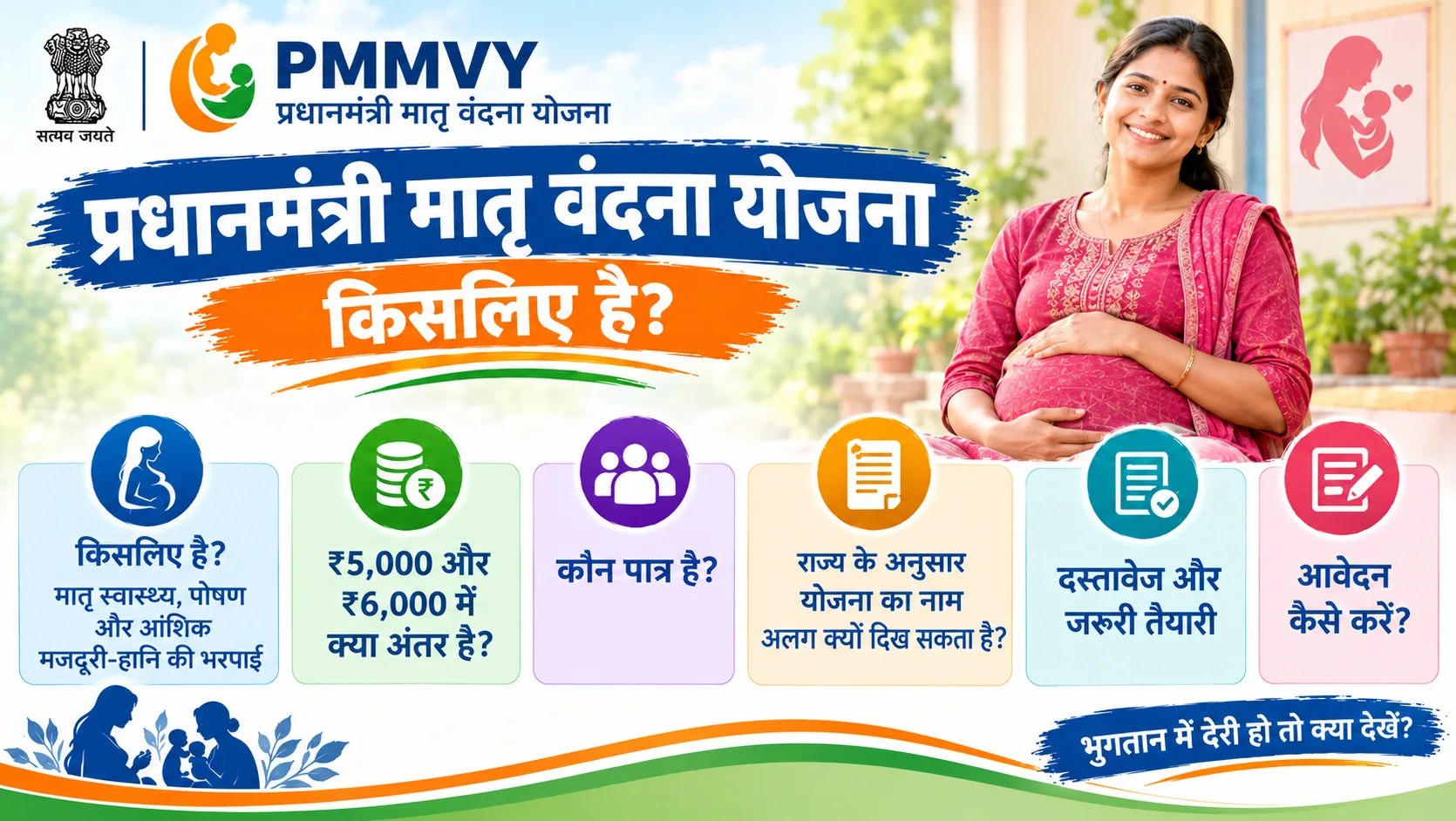
PMMVY offers eligible mothers ₹5,000 for their first child and ₹6,000 for a second child if the child is a girl, subject to conditions and state implementation.
Eligibility: Eligible pregnant/lactating woman meeting relevant socioeconomic criteria; first child or second child if a girl; Aadhaar, ANC and immunisation conditions apply.
Purpose and scope
Pradhan Mantri Matru Vandana Yojana (PMMVY) provides conditional maternity assistance intended to support maternal nutrition, healthcare engagement and partial compensation for wage loss. It is not an unconditional transfer to every pregnant person. Eligibility is based on the scheme’s socioeconomic criteria as well as registration, antenatal care, childbirth and infant immunisation requirements. Benefits are generally transferred directly to the beneficiary’s Aadhaar-linked bank or post-office account.
First child: how ₹5,000 is paid
For the first eligible living child, the central PMMVY rules provide ₹5,000 in two instalments rather than a single ₹5,000 payment. The Ministry of Women and Child Development lists ₹3,000 associated with pregnancy registration and the required antenatal-check conditions. A further ₹2,000 is linked to birth registration and completion of the relevant first immunisation cycle by approximately 14 weeks. Scheme authorities verify the healthcare milestones before releasing payment, and receipt is not guaranteed merely by filing a form.
Second child: when ₹6,000 applies
A separate PMMVY 2.0 provision covers the second child only when that child is a girl and other eligibility conditions are met. The official rule describes a ₹6,000 single instalment after birth and immunisation milestones, with pregnancy registration and antenatal checks also relevant. This should not be misread as a universal ₹6,000 allowance for every second pregnancy. The official ministry FAQ highlights the need to register during pregnancy for the second-girl benefit.
Eligibility categories and evidence
Government FAQs list various groups within the socioeconomic targeting framework. They include women from Scheduled Caste and Scheduled Tribe communities; certain persons with disabilities; NFSA/BPL ration-card holders; PMJAY beneficiaries; e-Shram card holders; PM-KISAN or MGNREGA households; and women whose family income meets the specified ceiling, among other categories. The relevant supporting document depends on the category used to establish eligibility. Applicants should verify the latest category list with their Anganwadi/ASHA worker rather than assuming any one document alone guarantees payment.
Important state implementation distinction
Some central PMMVY FAQ pages still mention separate schemes in Odisha and Telangana. Odisha, however, published an official MAMATA–PMMVY co-branding/joint-implementation update effective April 2025. An Odisha applicant should therefore consult the Odisha-specific scheme and local frontline workers rather than assume the national programme works identically across states. Applicants in Telangana should similarly confirm the current state maternity scheme and applicable channel. This guide avoids declaring a single application process for every state.
Documents and information to collect
Prepare the applicant’s Aadhaar and matching personal details, an active bank or post-office account capable of receiving DBT, mobile number, pregnancy registration details and antenatal care record. Later stages may require birth registration and evidence that the baby received age-appropriate immunisations. Keep supporting material for the qualifying socioeconomic category, such as a ration card, income-related document or other recognised proof. Digital verification and identity checks can vary by implementation period and local administration.
How to apply and track progress
Eligible women can approach their nearest Anganwadi or ASHA worker; the central ministry also identifies the official PMMVY portal as a self-registration option. Choose the correct benefit category and enter consistent identification and health details. Keep any acknowledgement details, follow requests for corrections and monitor the application and disbursement status using the official portal or local worker. If a second-girl benefit is involved, do not postpone pregnancy registration until after delivery without checking the official window.
Common payment problems
A pending payment may relate to incomplete antenatal checks, birth or vaccination data, eligibility proof, an Aadhaar mismatch, DBT bank-seeding status or approval workflow. Ask an authorised official which step is unresolved before repeating an application. Use the official grievance facility for continued issues. Never share medical records, Aadhaar authentication codes or banking PINs with unofficial agents promising faster transfer.
Frequently asked questions
Is the first-child benefit ₹6,000?
The PMMVY cash benefit is ₹5,000 for the first eligible child; separate scheme benefits such as Janani Suraksha Yojana may apply under their own rules.
Can any second child attract ₹6,000?
The described PMMVY provision requires a girl child.
Is this uniform throughout India?
No, check state-specific implementation, particularly Odisha and Telangana.
Does filing a form ensure payment?
No, eligibility and health milestones must be verified.
Editorial verification note
Checked on 17 October 2026 using central official PMMVY information. State implementation details and submission windows should be reconfirmed before publication, especially for Odisha and Telangana. This independently written page is explanatory information and not an official application portal.
Explore related government schemes
Always check the official website for final and accurate information.
Visit official website: pmmvy.wcd.gov.in ↗Last updated: 18 Oct 2026