
Banglar Bari Gramin: West Bengal Rural Housing Assistance
A practical guide to West Bengal rural home-building support, official beneficiary lists and instalment checks.
Eligibility: Rural West Bengal households identified as eligible for housing support through the relevant official survey, beneficiary list and local verification.
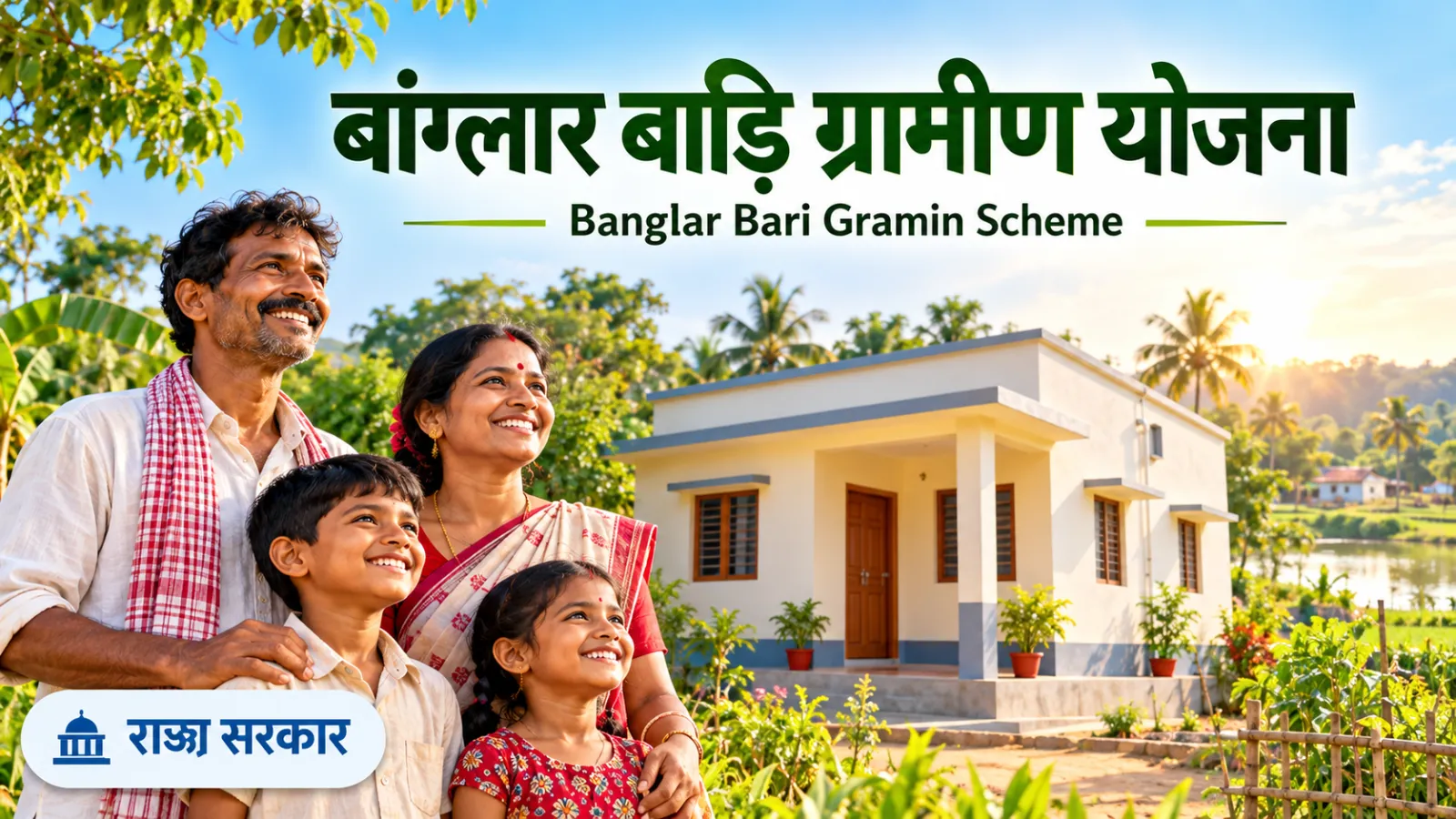
Banglar Bari Gramin: West Bengal Rural Housing Assistance: Practical 2026 Guide
A practical guide to West Bengal rural home-building support, official beneficiary lists and instalment checks. This guide distinguishes published programme design from an individual entitlement, approval or disbursement. It is written for readers who need to identify the actual authority handling their next step.
Key facts before proceeding
- Banglar Bari (Gramin) is a state-funded rural housing intervention; it should not be mistaken for PMAY-G or the urban Banglar Bari programme.
- The state rural development training handbook describes assistance of ₹1.20 lakh in two ₹60,000 instalments for eligible households.
- Selection is based on survey evidence, verified lists and local government review, not an open entitlement for every resident.
- West Bengal district portals publish location-specific provisional lists that may later be corrected or finalised.
The housing gap this programme is intended to address
A safe permanent home changes far more than the appearance of a village. Families living in temporary structures face rain damage, unsafe storage, limited privacy and recurring repair bills. The rural programme directs public support towards verified housing need.
Always separate a programme announcement from the operative conditions under which benefits are delivered. An official page can explain the design without confirming that a particular application window is currently open. Check the department and local implementing institution before paying a fee or submitting sensitive documents.
Understanding the assistance amount
The published ₹1.20 lakh figure is a programme assistance amount, not a promise that a completed house of any design will be delivered. Households may have different site preparation, material and labour costs.
For practical planning, create a short record of the problem, the organisation contacted and the evidence already supplied. This makes follow-up more efficient. Do not create a duplicate application simply because a portal has not immediately updated its status; ask the authorised office what the current record actually shows.
Why household surveys matter
Field surveys help distinguish a household genuinely lacking adequate shelter from one already recorded under another housing arrangement. Survey officers, local records and review stages can produce provisional results before any sanction.
Headline benefit amounts should not be used as personal financial guarantees. Some programmes deliver services, some involve lending, and others transfer approved assistance. The beneficiary should understand the correct mechanism before committing household savings, signing a loan agreement or promising a payment to a third party.
How to read a provisional beneficiary list
District portals sometimes separate eligible, ineligible and inactive records. Treat a provisional list as a stage in administrative scrutiny. It can help locate a household record but does not replace a final sanction or payment confirmation.
Take special care with identity information. A convincing social-media graphic and a government-style logo do not authenticate a payment or an application link. Use recognised public-service channels, keep credentials private and request a receipt when the relevant office formally accepts a document or correction.
The role of local rural institutions
The gram sabha and block administration provide a local review route. Residents can ask where survey findings were discussed, how an objection is recorded and which office is responsible for the next approval stage.
Where implementation varies by district or institution, ask a precise question rather than assuming a nationwide procedure. The most useful answer identifies the responsible authority, the current stage and the next document or decision required. Keep a dated copy of that answer so later enquiries are grounded in evidence.
Planning construction without unrealistic promises
A practical housing plan needs attention to drainage, a usable cooking area, ventilation, safe building material and local weather. Beneficiaries should not rely on an agent promising to build an unusually large home using only the published assistance.
The useful next step is to identify exactly which part of the process applies to the household or applicant. Keep the relevant reference, date and written response together. A neighbour’s experience may be helpful context, but it is not evidence that the same eligibility decision or timetable applies in another case.
Checking whether an instalment was credited
An approved household record may not mean that an electronic transfer has settled. Match the specific instalment and beneficiary reference with official account history instead of relying solely on an SMS or a screenshot.
Always separate a programme announcement from the operative conditions under which benefits are delivered. An official page can explain the design without confirming that a particular application window is currently open. Check the department and local implementing institution before paying a fee or submitting sensitive documents.
Documents and record preparation
Keep the household identity details, available residence and property information, bank particulars and any survey acknowledgement together. The local authority should determine the actual list of acceptable evidence.
For practical planning, create a short record of the problem, the organisation contacted and the evidence already supplied. This makes follow-up more efficient. Do not create a duplicate application simply because a portal has not immediately updated its status; ask the authorised office what the current record actually shows.
Why PMAY-G is not an interchangeable name
Housing objectives may overlap, but scheme identity matters. A family must know whether its record belongs to the state Banglar Bari Gramin workflow or another housing programme before following portal instructions.
Headline benefit amounts should not be used as personal financial guarantees. Some programmes deliver services, some involve lending, and others transfer approved assistance. The beneficiary should understand the correct mechanism before committing household savings, signing a loan agreement or promising a payment to a third party.
Resolving errors in the list
If a record has the wrong household name, location or housing condition, seek the designated objection and correction process. Retain an acknowledgement so the same matter can be followed up without repeated fresh applications.
Take special care with identity information. A convincing social-media graphic and a government-style logo do not authenticate a payment or an application link. Use recognised public-service channels, keep credentials private and request a receipt when the relevant office formally accepts a document or correction.
Avoiding housing-list intermediaries
Fake lists and payment-release agents exploit the anxiety of families waiting for assistance. Confirm an office or district portal before supplying account information, and never disclose an OTP to someone promising approval.
Where implementation varies by district or institution, ask a precise question rather than assuming a nationwide procedure. The most useful answer identifies the responsible authority, the current stage and the next document or decision required. Keep a dated copy of that answer so later enquiries are grounded in evidence.
A careful household construction checklist
Construction should follow the permitted design and site requirements. Keep receipts, photographs where officially needed, instalment records and the local inspection instructions so that discrepancies can be addressed early.
The useful next step is to identify exactly which part of the process applies to the household or applicant. Keep the relevant reference, date and written response together. A neighbour’s experience may be helpful context, but it is not evidence that the same eligibility decision or timetable applies in another case.
Finding current district information in 2026
Publication dates can differ among districts and phases. A 2025 provisional list is historical evidence, not proof that the same application window remains open in October 2026. Check local notices before travelling.
Always separate a programme announcement from the operative conditions under which benefits are delivered. An official page can explain the design without confirming that a particular application window is currently open. Check the department and local implementing institution before paying a fee or submitting sensitive documents.
What beneficiaries should remember
The useful question is not merely whether the scheme exists, but whether a particular household passed the relevant checks and where its record stands. Verified status and genuine account credits should guide the next step.
For practical planning, create a short record of the problem, the organisation contacted and the evidence already supplied. This makes follow-up more efficient. Do not create a duplicate application simply because a portal has not immediately updated its status; ask the authorised office what the current record actually shows.
Frequently asked questions
Does meeting a headline description guarantee approval?
No. The competent authority still checks the applicable scheme conditions, supporting records and implementation requirements.
Is there always an open online application form?
No. Some processes involve official service centres, district offices, bank appraisal or pre-existing beneficiary lists. Check the current route.
What if my identity or household records do not match?
Use the responsible agency’s correction procedure and retain an acknowledgement. Do not hand OTPs or account passwords to an unofficial intermediary.
How should a pending payment be investigated?
Identify whether the outstanding step is verification, sanction, transfer processing or actual bank credit. Different agencies handle these stages.
Can a social-media deadline be trusted?
Not without confirmation. Check the government notice and its date; an old application window may have already closed.
Where should an applicant verify the rules?
Use the official government resources below and contact the authorised implementing office for any case-specific decision.
Official sources
- https://uttardinajpur.gov.in/banglar-bari-rural-housing-scheme/
- https://purbamedinipur.gov.in/survey-for-rural-housing-2024-2025/
- https://coochbehar.gov.in/notice/publication-of-provisional-lists-of-banglar-bari-gramin-phase-ii-for-12-blocks-in-cooch-behar-district/
Independent informational portal, not a government agency. Verify the latest scheme rules before applying.
Always check the official website for final and accurate information.
Visit official website: uttardinajpur.gov.in ↗Last updated: 20 Oct 2026